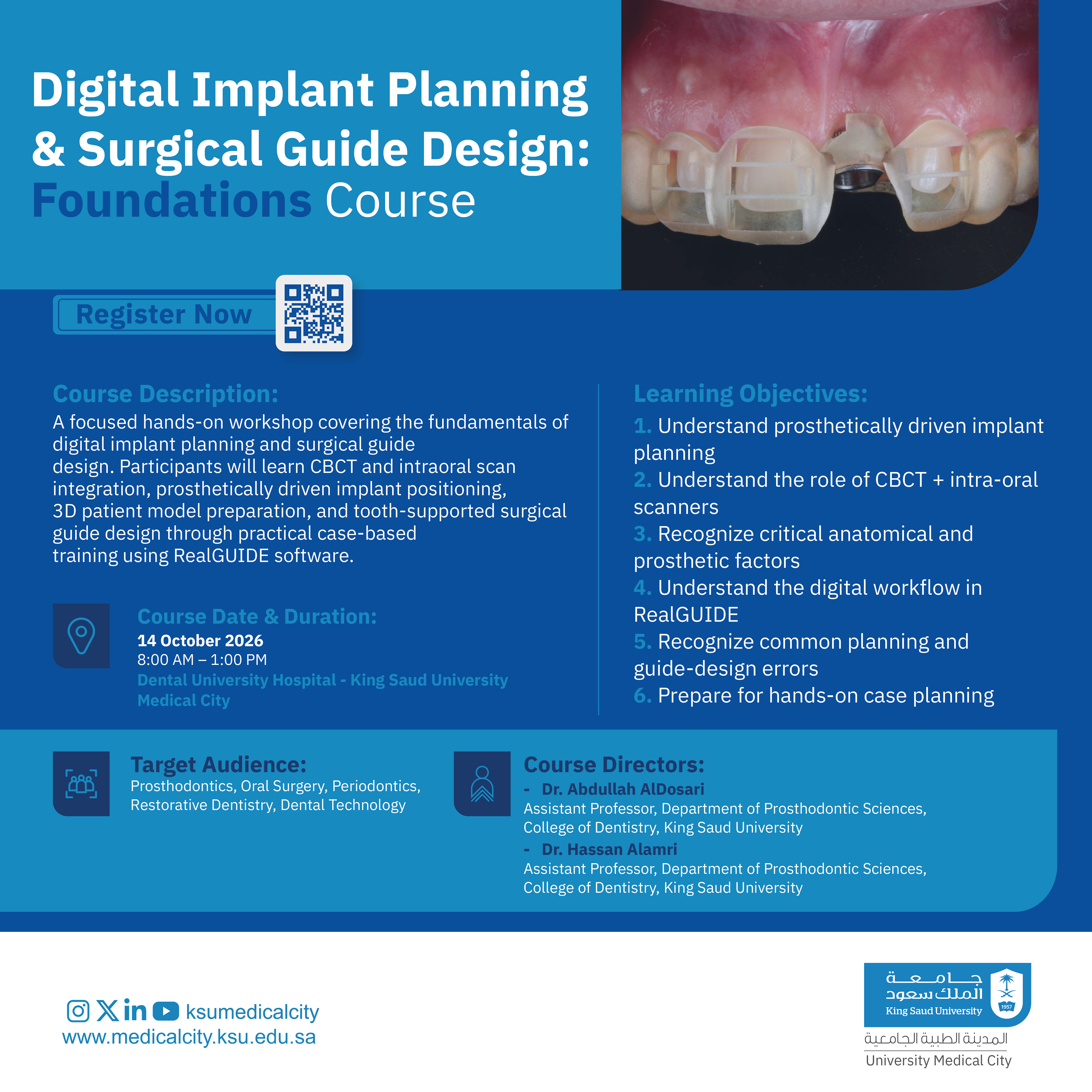
A focused hands-on workshop covering the fundamentals of digital implant planning and surgical guide
design. Participants will learn CBCT and intraoral scan integration, prosthetically driven implant positioning,
3D patient model preparation, and tooth-supported surgical guide design through practical case-based
training using RealGUIDE software.
Learning Objectives:
• Understand prosthetically driven implant planning
• Understand the role of CBCT + intra-oral scanners
• Recognize critical anatomical and prosthetic factors
• Understand the digital workflow in RealGUIDE
• Recognize common planning and guide-design errors
• Prepare for hands-on case planning
Dr. Abdullah AlDosari
Assistant Professor, Department of Prosthodontic Sciences, College of Dentistry, King Saud University Dr. Hassan Alamri
Assistant Professor, Department of Prosthodontic Sciences, College of Dentistry, King Saud University
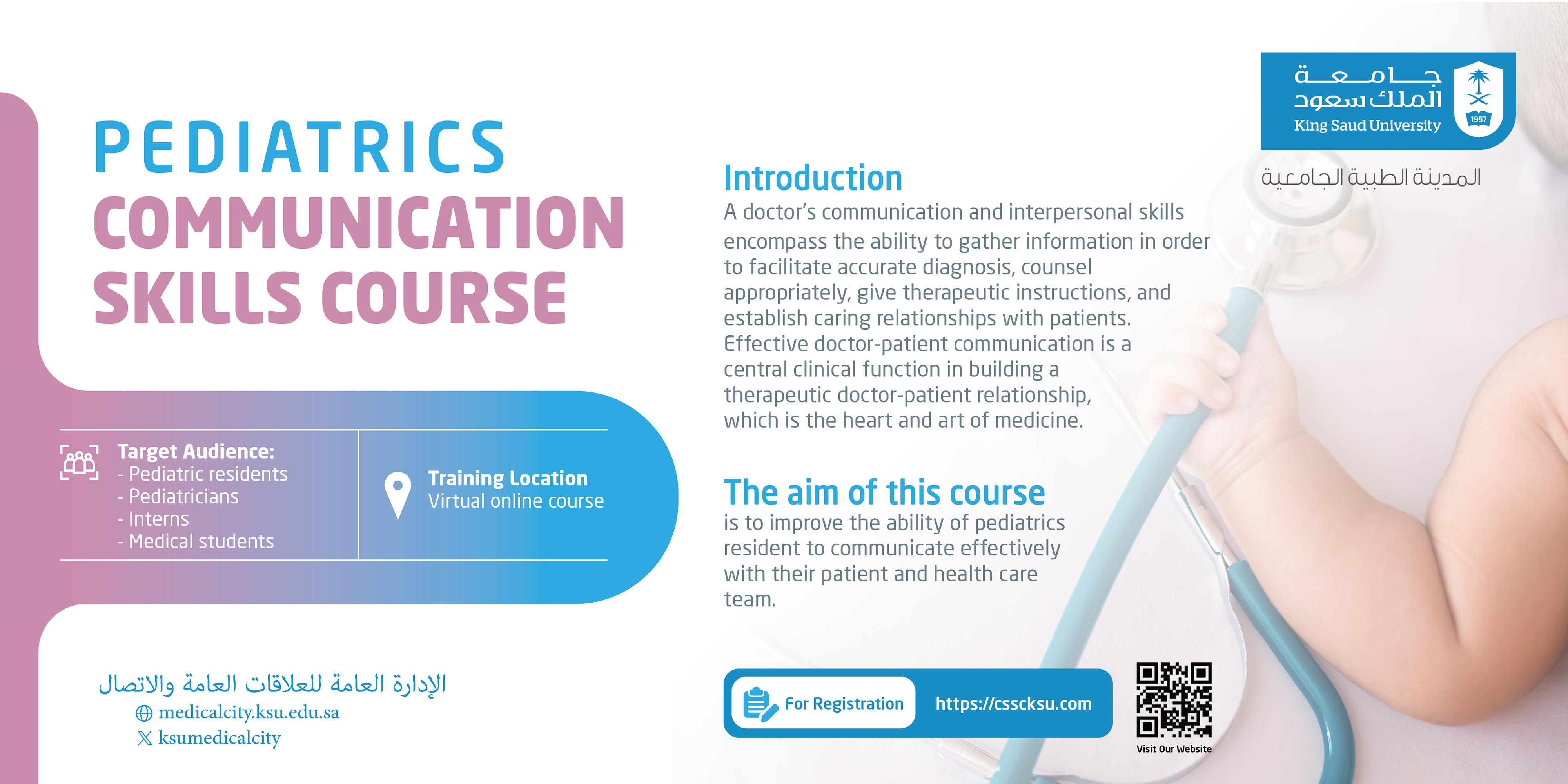
A doctor's communication and interpersonal skills encompass the ability to gather information in order to facilitate accurate diagnosis, counsel appropriately, give therapeutic instructions, and establish caring relationships with patients. Effective doctor-patient communication is a central clinical function in building a therapeutic doctor-patient relationship, which is the heart and art of medicine.
The aim of this course is to improve the ability of pediatrics residents to communicate effectively with their patient and health care team.
CSSC reserves the right to reschedule the course to another suitable date if minimum enrollment is not met. No refunds will be issued.
Additionally, the CSSC may reschedule the hands-on session if fewer than six participants are registered.
Course Description
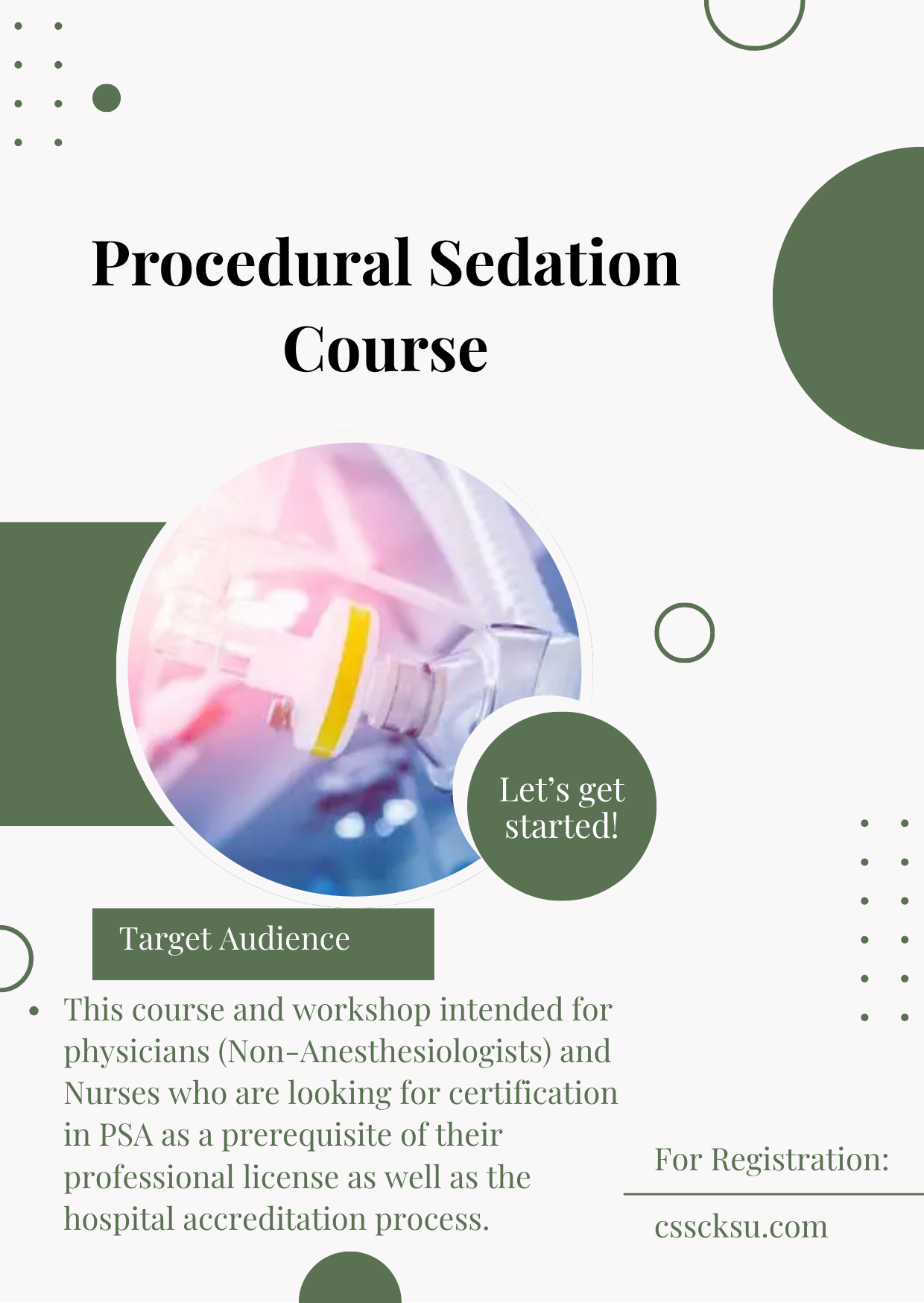
This course and workshop are designed for physicians (Non-Anesthesiologists) seeking certification in Procedural Sedation and Analgesia (PSA), required for professional licensing as well as hospital accreditation processes.
Course Schedule
Part One: Online Session
NOV 04, 2026
Time: 16:00 -18:00
Part Two: Hands-On Session
NOV 05, 2026
starts at: 09:00 AM
Learning Objectives
Upon completion of this program, participants will be able to:
Understand the Sedation Continuum
Prepare patients for PSA
Identify high-risk patients
Perform sedation safely and effectively in accordance with regulatory guidelines
Plan for and address special patient needs
Recognize and appropriately respond to emergency situations
Titrate sedatives and analgesics based on pharmacologic characteristics
Apply appropriate sedation techniques and routes
Monitor patients effectively during sedation
Assess patient responsiveness, airway, ventilation, oxygenation, and circulation
Rescue patients from deeper-than-intended sedation
Monitor patients during post-sedation recovery for safe emergence
CSSC reserves the right to reschedule the course to any suitable date if minimum enrollment is not met.
No refunds will be issued.
Course Description
This course and workshop are designed for Healthcare providers (non-anesthesiologists) seeking certification in Procedural Sedation and Analgesia (PSA). It fulfills requirements commonly needed for professional licensing and hospital accreditation processes.
Format: Online Course
Learning Objectives
Upon completion of this program, participants will be able to:
Understand the Sedation Continuum
Prepare patients for PSA
Identify high-risk patients
Perform sedation safely and effectively in accordance with regulatory guidelines
Plan for and manage special patient needs, including appropriate responses to emergencies
Titrate sedatives and analgesics based on pharmacologic principles
Apply various techniques and routes of sedation
Monitor patients effectively
Assess patient responsiveness, airway, ventilation, oxygenation, and circulation
Rescue patients from deeper-than-intended sedation
Monitor post-sedation recovery to ensure safe emergence
Discharge patients appropriately following recovery
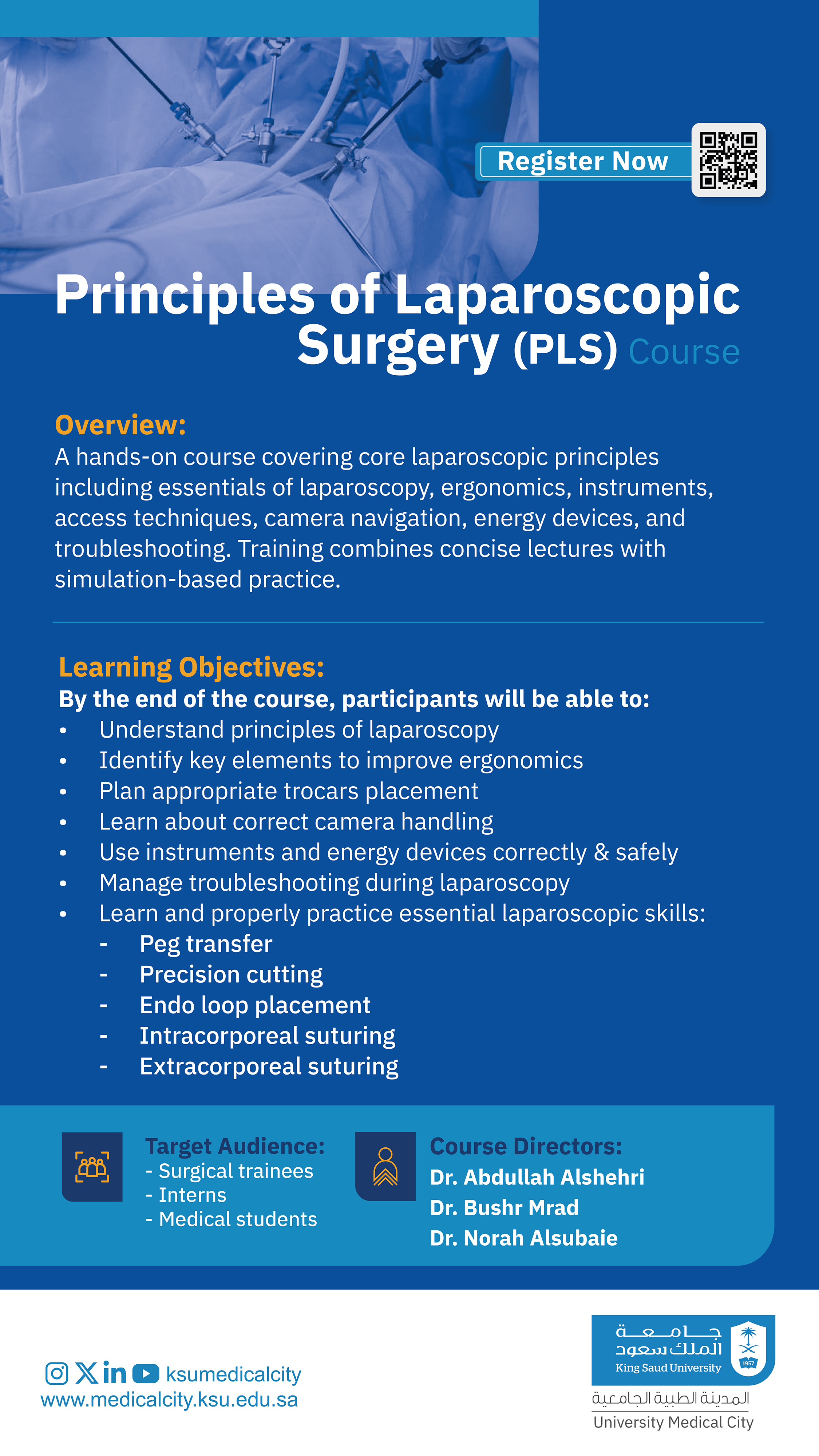
Participants will have an interactive discussion to the fundamentals of laparoscopic surgery and have the opportunity to practice and master these skills in a simulated fashion under the supervision of expert laparoscopic surgeons from KSUMC.
Course Objectives:
1.Introduction to Laparoscopic Surgery through interactive session.
2. Practice basic and advanced laparoscopic surgical skills.
 Process In Progress . . .